
Simarouba glauca · Multi-Omics Profile · Anvesha
Project Anvesha Powered by AltheaIntel
Project Anvesha™ · Decoding Plant Intelligence

Decoding Simarouba glauca into evidence.

A multi-omics profile of the Paradise tree, generated through Project Anvesha™ and analysed on AltheaIntel, an integrated multi-omics-based discovery engine applying Augmented Intelligence, utilising Human-AI capabilities.

{{ l.label }}
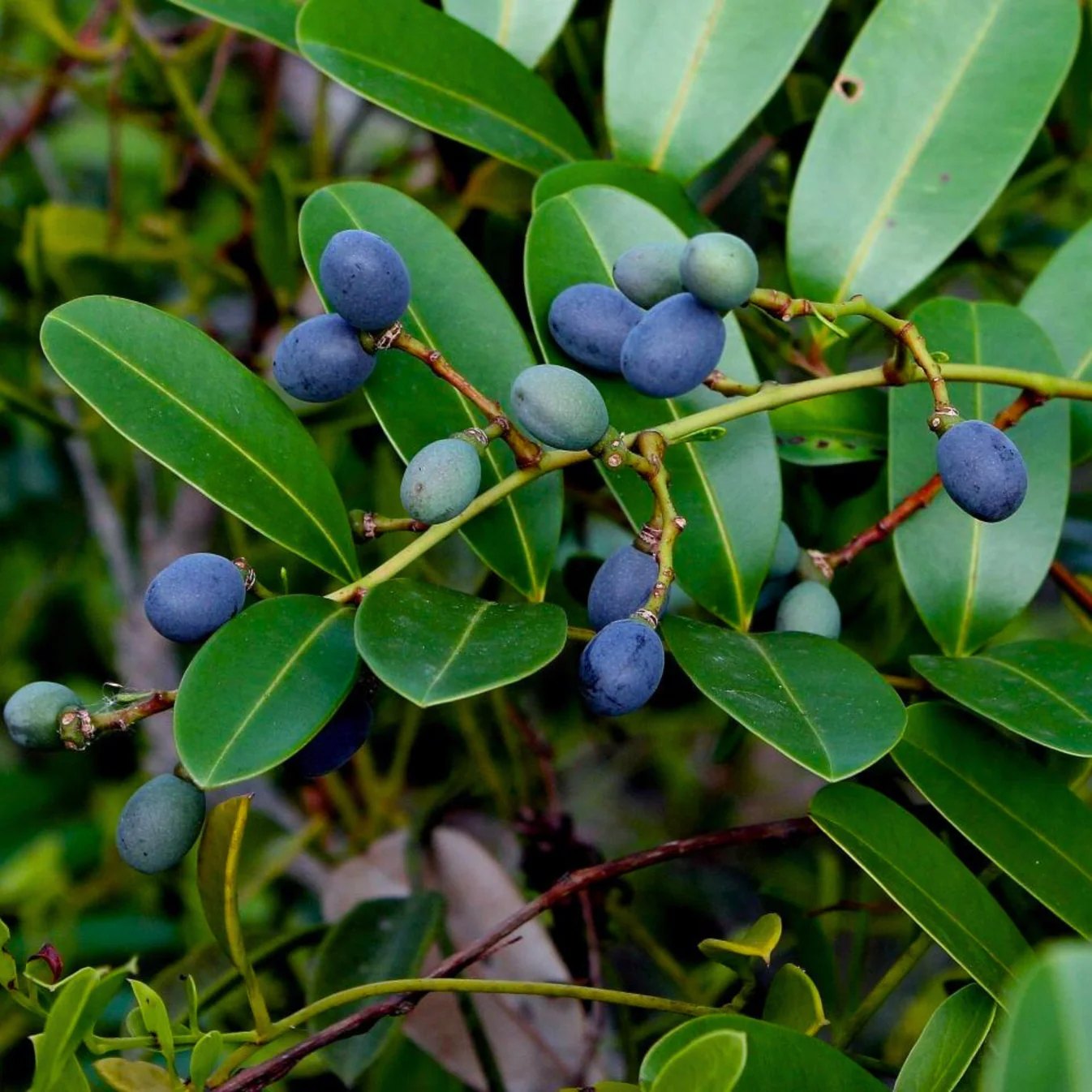
Simarouba glauca fruit and foliage
Simarouba glauca DC. · Paradise tree 4omics layers 7mechanistic axes
The herb

Simarouba glauca, the Paradise tree or Laxmitaru.

A medicinal tree native to tropical America and cultivated across India, traditionally used for gastrointestinal disorders, dysentery, fever and inflammatory conditions. It was selected for molecular profiling because of its established traditional use and emerging evidence of biological activity, particularly in oncology.

Family Simaroubaceae Parts studied Leaves, bark, roots, seeds Key chemistry Quassinoids
{{ s.v }}
{{ s.k }}

How Anvesha works

Rooted in Tradition. Driven by Science. Powered by Intelligence.

  1. {{ s.n }} {{ s.h }} {{ s.p }}
Multi-omics outcomes

Tap a layer to see its outcomes.

MDA-MB-231 triple-negative breast cancer cells, treated with the standardized extract at 25 µg/mL, compared with untreated controls.
The herb

The Paradise tree, Laxmitaru.

Botany, traditional use, reported biological activities and phytochemistry of Simarouba glauca, and why it was chosen for profiling.

01 / Rationale

From traditional knowledge to molecular mechanism.

Simarouba glauca was selected as a representative medicinal herb for scientific characterization and functional profiling based on its established traditional use and emerging evidence of biological activity.

Published evidence indicates that extracts and fractions exhibit biological activity across several experimental models, with particular interest in oncology: inhibition of proliferation, induction of apoptosis, modulation of cell-cycle progression and regulation of cellular signaling.

Selection is supported by
{{ c.n }} {{ c.t }}
02 / Botany and traditional use
{{ b.k }} {{ b.v }}

Traditionally used as decoctions, infusions, tinctures and teas for gastrointestinal disorders, dysentery, fever and inflammatory conditions. Its reported use in cancer and tumor-related conditions provides the basis for pharmacological and mechanistic investigation.

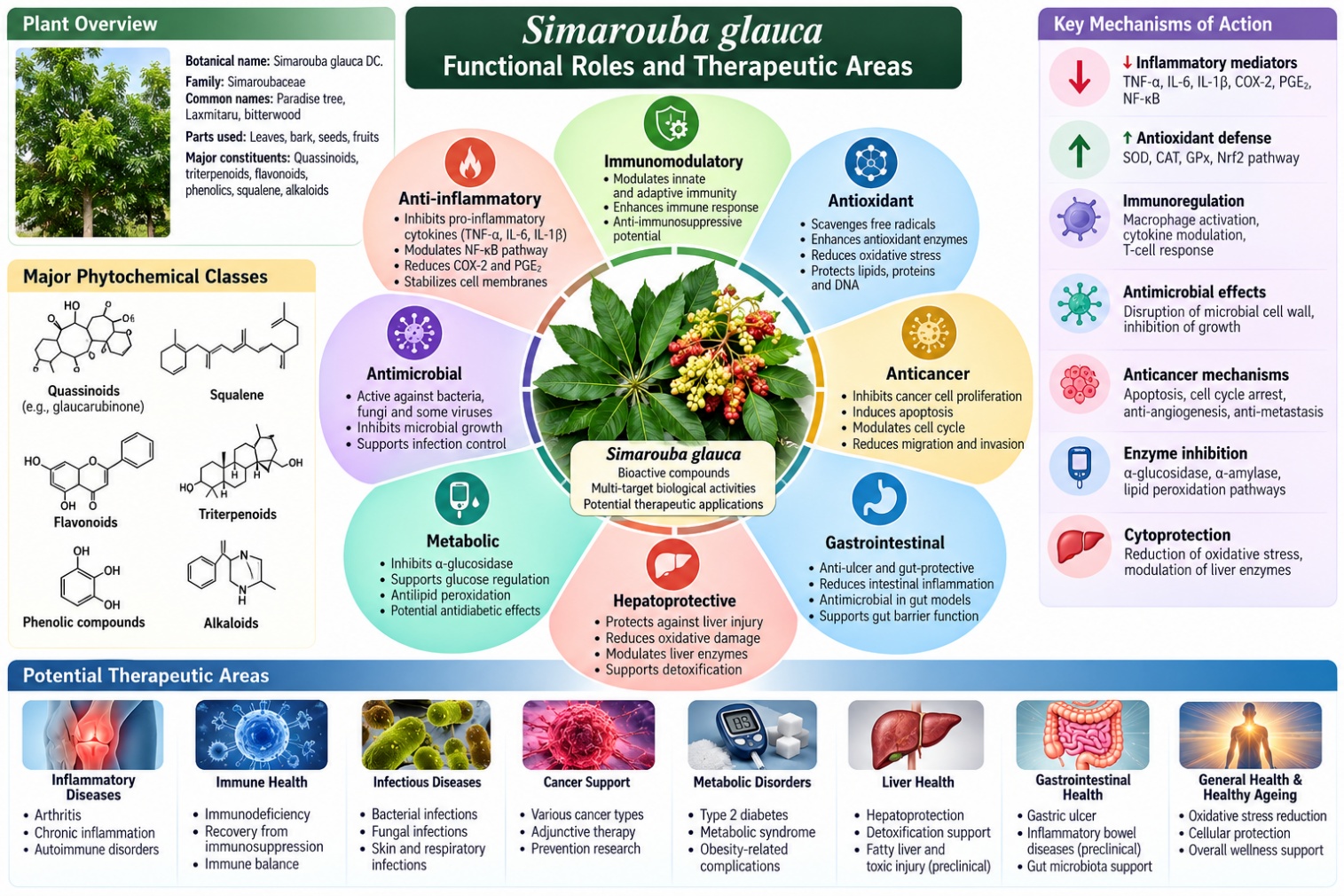
Simarouba glauca at a glance
Simarouba glauca functional roles and therapeutic areas
Functional roles, major phytochemical classes, proposed mechanisms of action and potential therapeutic areas.
03 / Reported activity

Biological activities and evidence

{{ a.k }} {{ a.v }} {{ a.e }}
04 / Phytochemistry

Major phytochemical groups

{{ p.k }} {{ p.v }}

Quassinoids are particularly relevant because of their diverse biological activities, but some also have significant toxicity. Their presence is not evidence of safety or therapeutic value.

Bioactivity

A standardized extract with anticancer activity, in vitro and in vivo.

Leaves of different ages were authenticated by DNA fingerprinting and profiled by HPLC. The aqueous-ethanolic extract gave the broadest chromatographic profile and was standardized for all studies.

{{ g.v }}
{{ g.k }}

Efficacy

In vivo · CT-26 colon
~54%

tumor growth inhibition at the highest dose after 21 days of oral dosing, without evident treatment-related toxicity.

In vivo · MDA-MB-231 xenograft
>50%

tumor growth inhibition at higher doses, with efficacy comparable to reference treatment controls.

In vitro panel

Concentration-dependent activity with preferential activity toward cancer cells over normal cells.

{{ c }}

Mechanism and biomarkers

Apoptosis and caspase activation, cell-cycle regulation, mitochondrial depolarization supporting the intrinsic apoptotic pathway, and anti-angiogenic activity through inhibition of endothelial-cell proliferation and migration.

{{ c }}

Combination therapy

Synergistic or additive effects across multiple cancer-cell models, supporting use as an adjunctive approach.

5-Fluorouracil Doxorubicin Paclitaxel

Drug interaction (CYP450)

{{ c.k }} {{ c.v }}

Safety and tolerability

{{ s.k }}
{{ s.v }}

Integrated development workflow

  1. {{ d.n }} {{ d.t }}
{{ L.tag }}

{{ L.title }}

{{ L.sub }}

{{ s.v }}
{{ s.k }}
{{ b.h }}
{{ b.p }}

Key interpretation

{{ p }}

{{ L.modelTitle }}

{{ m.t }} {{ m.g }}
In one line

{{ L.statement }}

{{ L.fig.title }}
{{ L.fig.title }}
{{ L.fig.cap }}
{{ L.split.upL }} {{ L.split.downL }}
{{ L.split.note }}

{{ g.title }}

{{ g.note }}

{{ li.title }} {{ li.count }}
{{ r.i }} {{ r.name }}
{{ r.fc }}
{{ r.role }} {{ r.rel }}

{{ rk.title }}

{{ it.n }}{{ it.t }}

{{ t.title }}

{{ h }}
{{ c.t }}

{{ L.procTitle }}

{{ p.d }} {{ p.k }}
{{ p.e }} {{ p.s }}
{{ f.title }}
{{ f.title }}
{{ f.cap }} {{ f.note }}

{{ t.title }}

{{ h }}
{{ c.t }}

Workflow

{{ s.n }} {{ s.t }}
{{ L.mfig.title }}
{{ L.mfig.cap }}
{{ L.mfig.cap }}

Experimental procedure

{{ s.n }} {{ s.t }}

Analysis

{{ b.h }}
{{ b.p }}
Conclusion

One extract, four layers, a converging mechanism.

Simarouba glauca does not act through a single target. Genes, intracellular proteins, secreted proteins and metabolites shift together: stress and adaptive programs switch on, while growth signaling, cell-cycle drive, invasion and metabolic fitness are turned down.

The mechanism, axis by axis

Seven biological axes, traced across every layer.

Each axis lists the molecules that carry it in each layer, and the functional readout already observed in the bioactivity studies. Tap an axis to open it.

{{ c.k }}
{{ c.v }}
Phenotype {{ a.ph }}

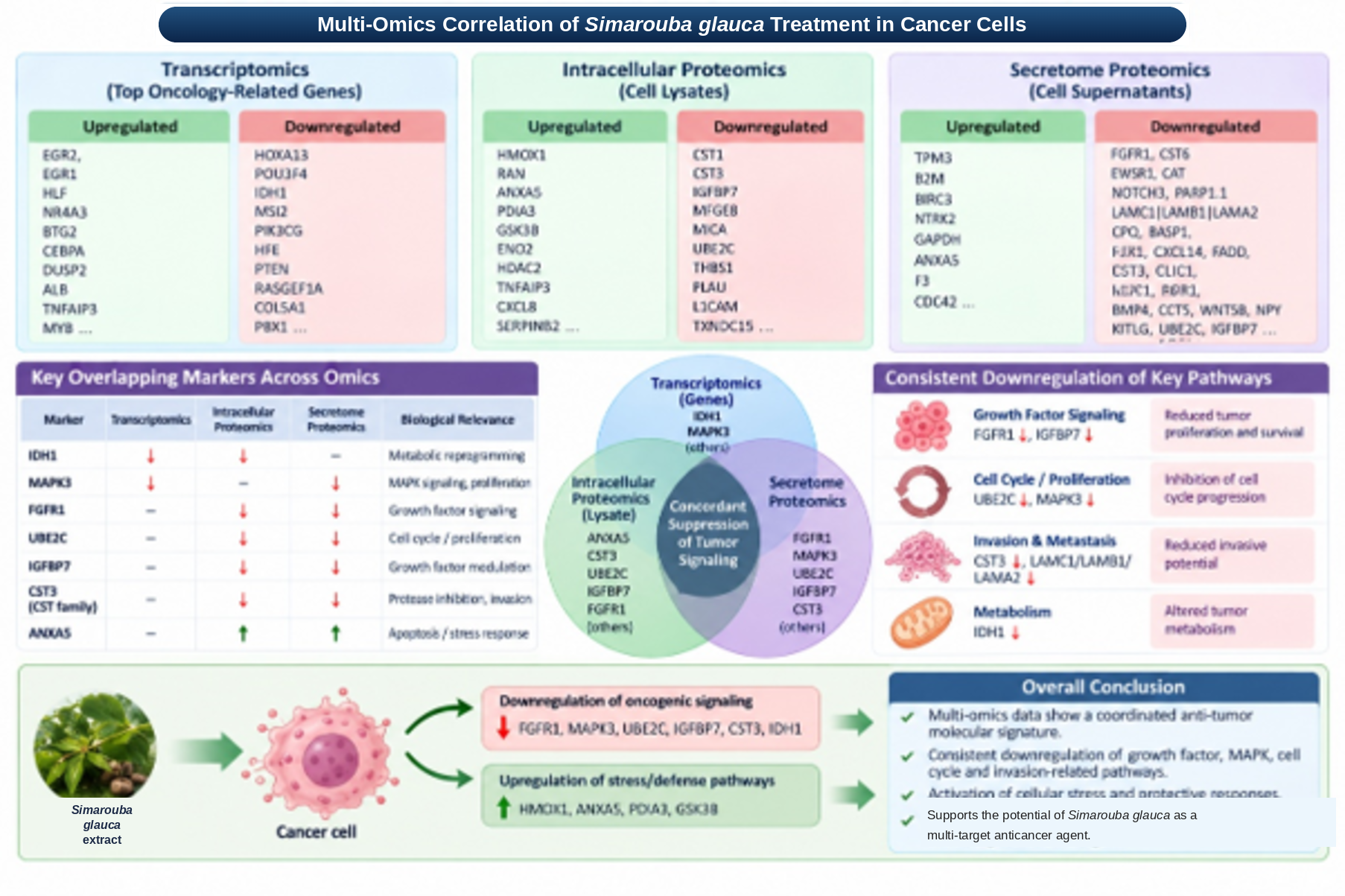
Markers that recur across layers

T = transcriptome, PL = intracellular proteome, PS = secretome. ↑ up, ↓ down.

MarkerTPLPSRelevance
{{ o.m }} {{ c.t }} {{ o.r }}

Pathway convergence

KEGG pathways supported by independent omics layers.

35
supported by at least 2 layers
1
supported by at least 3 layers
0
supported by all 4 layers
{{ k.p }} {{ k.l }}
{{ k.c }}
Immunomodulation: {{ k.i }}
How the omics layers agree
Multi-omics correlation across transcriptomics, intracellular proteomics and secretome proteomics
Multi-omics correlation: transcriptomics, intracellular proteomics and secretome proteomics.
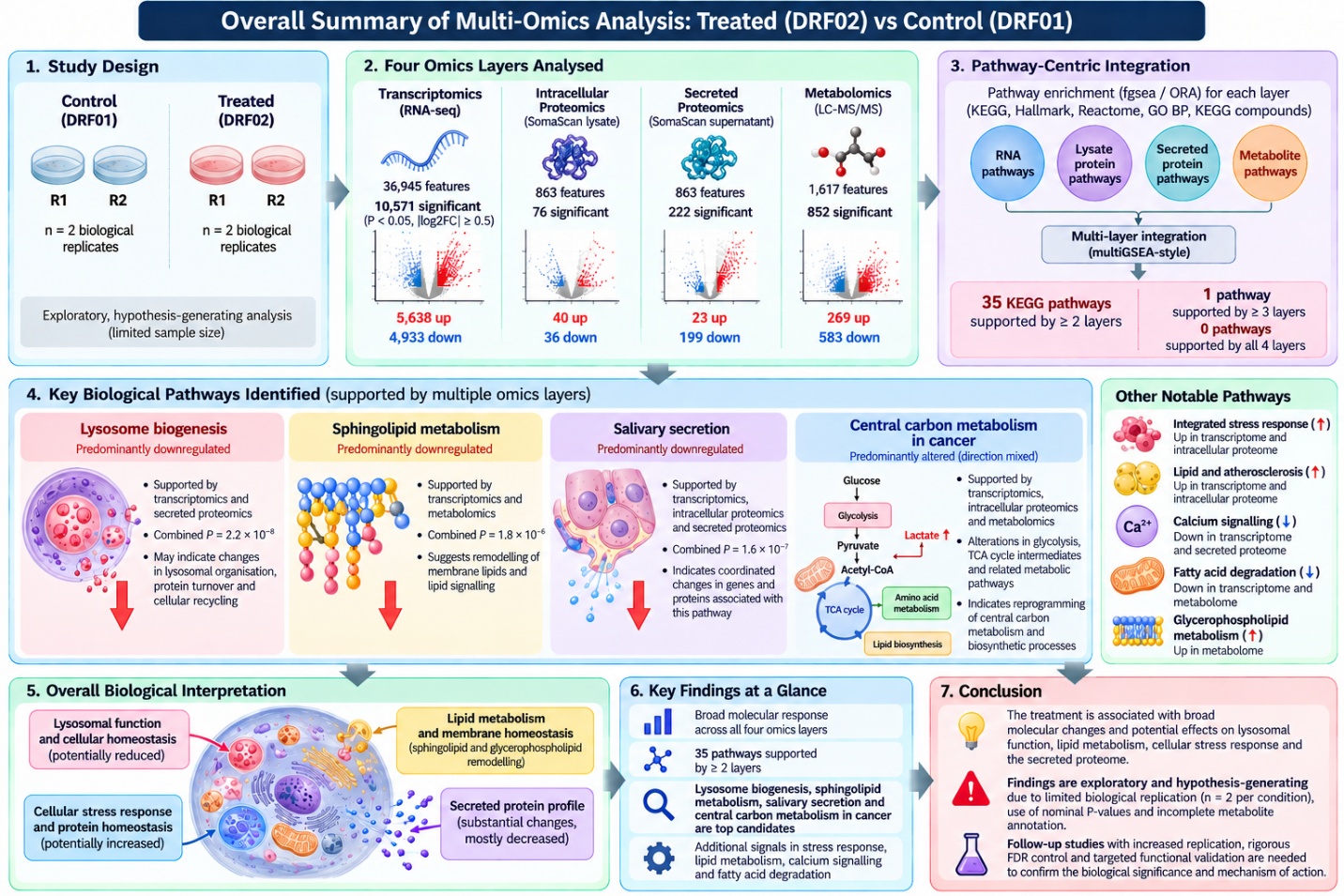
The full picture: treated vs. untreated
Overall summary of multi-omics analysis
Overall summary of the multi-omics analysis: Treated vs. Untreated. DRF02 = Treated, DRF01 = Untreated.
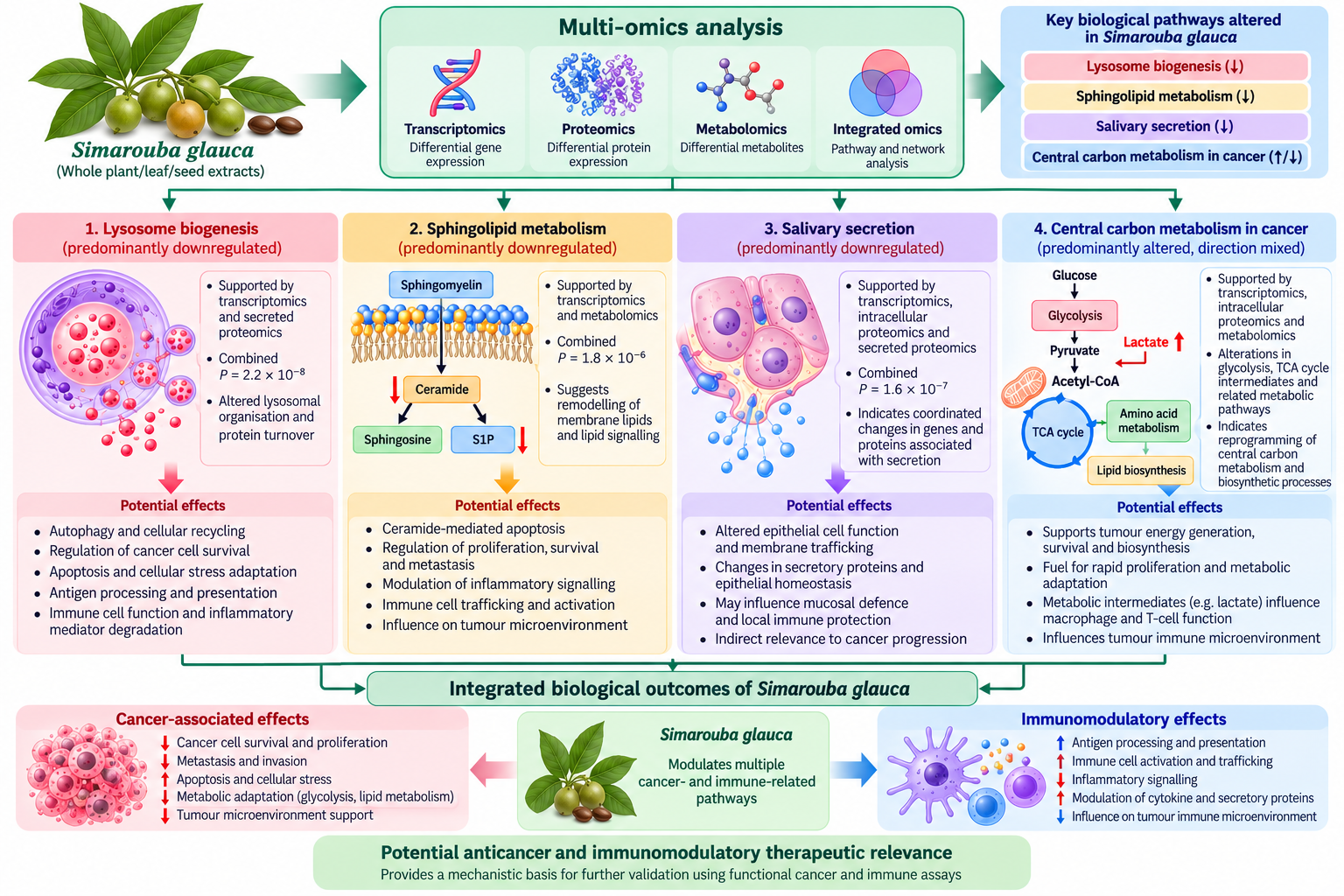
Cancer and immune pathways affected
Integrated multi-omics overview of cancer biology and immunomodulation
Key pathways altered by Simarouba glauca and their potential cancer-associated and immunomodulatory effects.
Overall

The multi-omics signature supports Simarouba glauca as a multi-target anticancer candidate, with coordinated suppression of growth-factor, MAPK, cell-cycle and invasion pathways alongside activation of cellular stress and protective responses.

Limitations and next steps
{{ l }}
  1. [{{ r.n }}] {{ r.t }} {{ r.u }}